SpaceX has fundamentally shifted its near-term priorities, moving away from its long-standing focus on Mars settlement to prioritize building a “self-growing city on the Moon” instead. Elon Musk announced the strategic pivot on Sunday, February 8, claiming the company could complete a functional lunar settlement in less than 10 years—significantly faster than the 20+ years required for Mars colonization.
This marks a dramatic reversal for Musk, who just 13 months prior declared the Moon “a distraction” and committed to taking SpaceX “straight to Mars.” The new strategy reflects practical considerations that make lunar development more achievable in the near term.
Why the Moon First?
The fundamental advantage of lunar development centers on launch frequency and iteration speed. SpaceX can launch to the Moon every 10 days with a 2-day trip time, compared to Mars opportunities only every 26 months with a 6-month journey. This dramatic difference in launch windows allows for much faster development cycles and mission iterations.
Musk emphasized another critical concern: the risk of resupply failures leaving a Mars colony unsustainable. “I’m worried that a natural or manmade catastrophe stops the resupply ships coming from Earth, causing the colony to die out,” he explained. A lunar base offers the advantage of closer proximity and more frequent supply missions, reducing existential risks to the settlement.
Additionally, lunar resources present significant advantages. NASA demonstrated in 2023 that oxygen can be extracted from lunar regolith, which comprises approximately 45 percent oxygen. This capability could dramatically reduce payload requirements by eliminating the need to ship liquid oxygen from Earth.
Starship and Artemis Integration
SpaceX’s Starship megarocket will serve as the primary vehicle for this lunar strategy. The fully reusable spacecraft will deliver the massive cargo loads required to establish and maintain lunar infrastructure. NASA selected Starship as the crewed lander for its Artemis program in April 2021.
Artemis 2 is set to launch in March 2026 with four astronauts conducting a lunar flyby, followed by Artemis 3’s planned landing at the lunar South Pole in 2027 or 2028. These NASA missions will form the foundation for SpaceX’s lunar settlement efforts.
Mars Remains Part of the Plan
Despite the reorientation toward lunar development, SpaceX hasn’t abandoned Mars. Musk indicated Mars development will begin in 5-6 years and proceed parallel with lunar efforts, with a potential manned Mars flight occurring around 2031. The Moon will simply serve as the initial proving ground and testing environment for technologies needed for eventual Mars colonization.
This strategic sequencing allows SpaceX to develop and validate critical systems—including life support, habitat construction, and resource utilization—in a location closer to Earth before attempting the far more challenging Mars mission.
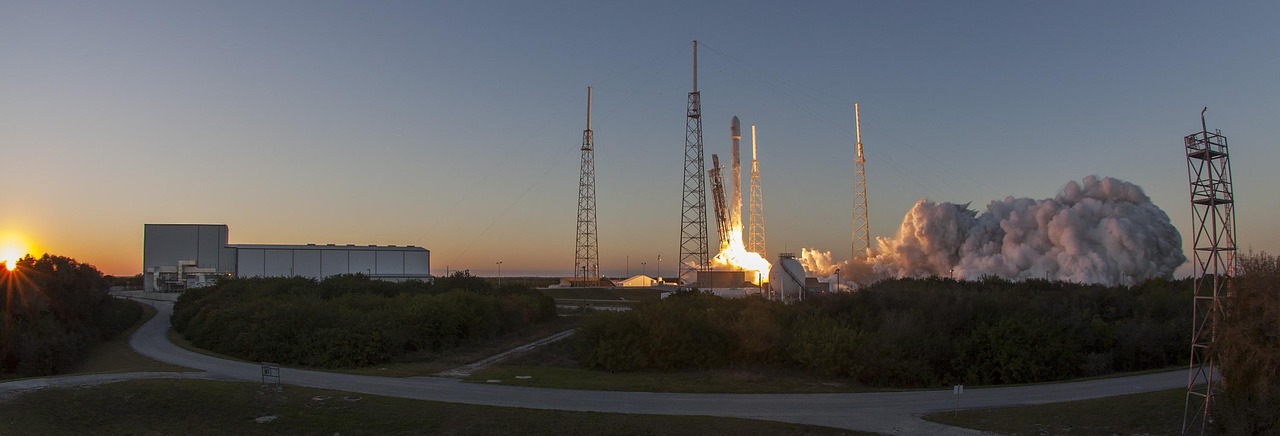
Photo by viktorleon960 on Pixabay