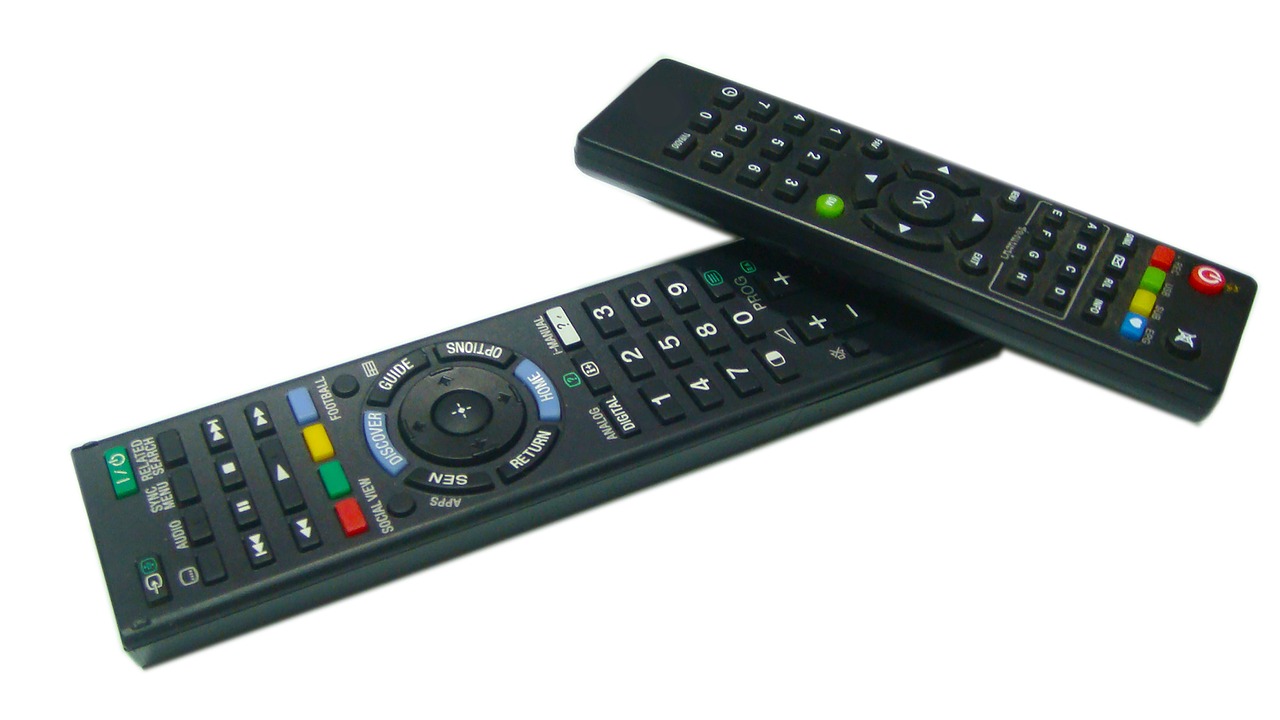
The TV remote control has come a long way since the 1950s, but one thing hasn’t changed: almost every remote still uses infrared (IR) technology. Even premium smart TVs that ship with Bluetooth-enabled remotes include an IR transmitter — and for good reason.
A Brief History of the Remote
The story begins in 1950 with the Lazy Bones, Zenith Radio Corporation’s first remote control — which was connected to the TV by a long cable. The first truly wireless remote arrived in 1955: the Flash-Matic, which used visible light beams aimed at photo cells on the TV’s front panel. By the 1980s, infrared had become the industry standard, and it has stuck around for more than four decades since.
Infrared remotes work by sending rapid, invisible pulses of light from an LED to a receiver on the TV. If you’ve ever pointed a remote at your phone’s camera and pressed a button, you’ve seen the IR LED flashing.
Why IR Won’t Go Away
The simplest reason is cost. Infrared transmitters cost pennies to manufacture, especially after decades of mass production. With millions of TVs, soundbars, and entertainment systems built around the IR standard, compatibility is IR’s killer feature. Abandoning a technology that is synonymous with TV control would make little sense when Bluetooth and infrared can coexist.
There’s also a practical necessity. A Bluetooth remote must be paired to a TV before it can control it — but how do you pair a remote if you can’t navigate the TV’s menus? Infrared solves this chicken-and-egg problem. Your remote uses IR for the initial pairing process, and crucially, it also uses infrared to turn the TV on and off, since Bluetooth radios are often inactive when the TV is in standby mode.
Bluetooth vs. Infrared: The Real Balance
Bluetooth has one clear advantage: it doesn’t require line of sight. You can change the volume from under a blanket without pointing the remote at the TV. But for most operations, modern remotes are clever hybrids.
As Adnan Ahmed demonstrated in a test on his TCL smart TV, the remote used IR only for two operations — power on and power off. Everything else (navigating menus, adjusting volume) was sent via Bluetooth. When he unpaired the remote, it gracefully fell back to infrared for all commands.
Infrared is also battery-efficient, though this matters less today since most remotes default to Bluetooth for routine use. Ultimately, IR has endured because it serves as both a reliable fallback and an essential pairing mechanism. Your remote may be using Bluetooth most of the time, but that infrared LED is still there when it counts.
This article draws on reporting by Adnan Ahmed for Engadget, published July 19, 2026.