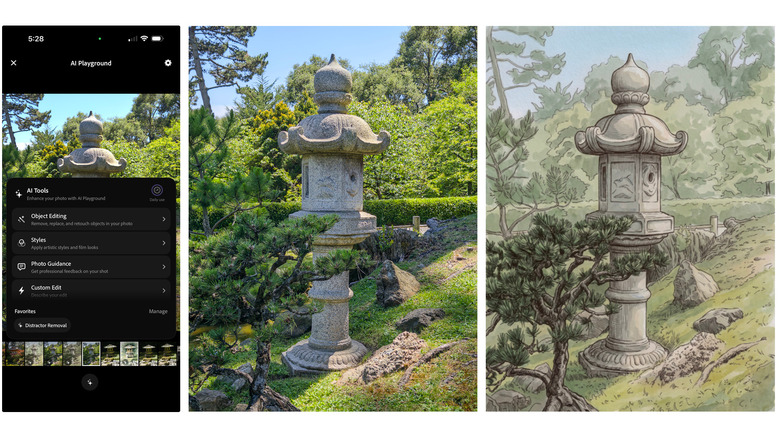
Adobe’s experimental Project Indigo camera app is getting a major infusion of generative AI features. Dubbed AI Playground, the new suite brings object removal, artistic style transfers, AI photo coaching, and prompt-based custom editing directly into the viewfinder — signaling a strategic pivot for the company’s mobile photography ambitions.
Project Indigo, first unveiled last year by Adobe’s Nextcam Team (staffed by former Google Pixel camera engineers), was originally positioned as a tool for smartphone photographers seeking a more natural, SLR-like shooting experience. But the new AI Playground feature set shifts the focus squarely toward generative AI assistance at the moment of capture.
“The goal is to explore how generative AI can assist mobile photographers at the point of capture,” the Nextcam Team said in a blog post.
Four AI-Powered Tools in One
AI Playground is organized into four distinct sections, each designed to solve a different photographic challenge:
Object Editing lets users remove unwanted distractions — people, cars, signs — from their shots with a single tap. It can also blur backgrounds to simulate a shallower depth of field, a feature traditionally reserved for dedicated cameras with wide-aperture lenses.
Styles transforms ordinary snapshots into artistic renderings with a choice of visual filters. Options like “pen and ink” or “ink line with color wash” can turn a photo into something resembling a hand-drawn illustration or watercolor painting.
Photo Guidance acts as a real-time photography coach. It critiques your composition and lighting, then offers actionable suggestions for improvement — all before you press the shutter.
Custom Edit is the most ambitious of the four. Users can describe an edit in natural language, and the AI will execute it. Adobe’s demo shows a photograph of a lantern being repositioned onto a mountain ledge with sunlight streaming in from the right — all via a text prompt.
Under the Hood
Currently, AI Playground runs on Google’s Nano Banana model, though Adobe says it could swap in different models as the technology evolves. The feature is available now in Project Indigo, which is free to download on the App Store.
However, Adobe is being cautious about the rollout. AI Playground is only being served to “a few percent of our users, and only for a few weeks.” Depending on uptake, the company may expand access — but the Nextcam Team has already signaled that a paid tier is likely.
“We can’t offer it for free forever,” the team wrote. “If the feature proves popular, we will eventually offer a paid version.”
What This Means for Mobile Photography
The shift from a natural-image philosophy to a generative-AI feature set reflects where the broader photography market is heading. Smartphone cameras have largely solved the hardware problem — computational photography now handles HDR, low light, and portrait modes with remarkable consistency. The next frontier is post-capture creativity, and Adobe is betting that consumers want AI tools baked into the camera experience rather than relegated to a separate editing app.
This puts Project Indigo in a unique position. Unlike Adobe’s flagship Lightroom and Photoshop — which have been adding generative AI features like Generative Fill and AI-powered masking — Indigo targets the capture moment, not the editing desk. It’s a bet that the line between taking a photo and editing one will continue to blur.
Availability
Project Indigo with AI Playground is available now on iOS via the App Store. The AI features are currently free but limited to a small subset of users. A broader rollout and potential paid subscription model will depend on the feature’s reception over the coming weeks.