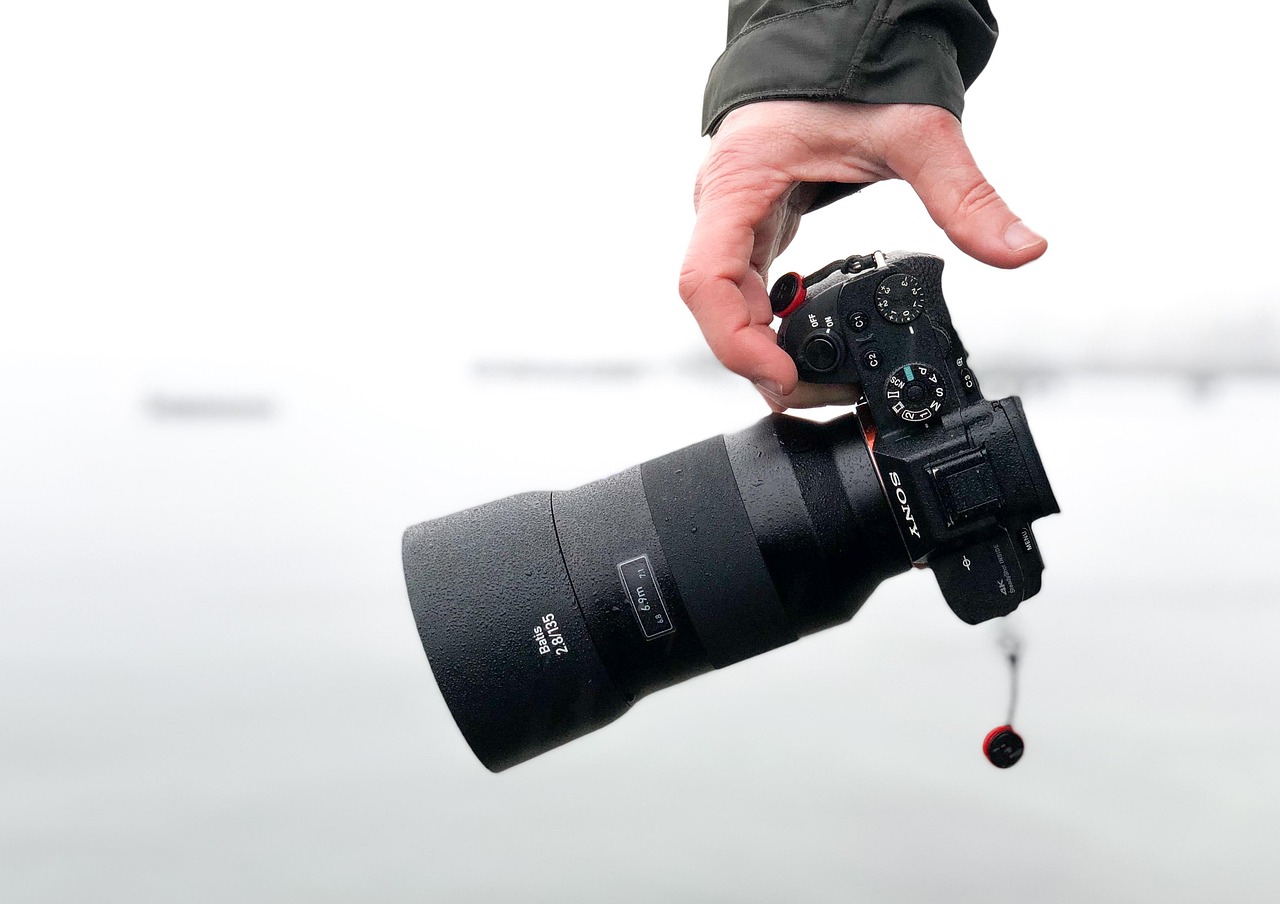
Sony has officially unveiled the RX10 V, the long-awaited successor to its popular RX10 superzoom lineup, bringing a complete design overhaul, next-generation autofocus, and powerful 4K 120p video capabilities. There’s just one catch: at $2,300, this is one of the most expensive compact cameras ever released.
A Decade in the Making
The RX10 V arrives a full nine years after the RX10 IV, and it shows — nearly every aspect of the camera has been modernized. At its core sits the same 24-600mm equivalent f/2.4-4.0 optical zoom lens paired with a 20.1-megapixel 1-inch stacked sensor. While the sensor resolution remains unchanged, Sony has equipped the camera with a new processor that unlocks significantly faster performance.

Sony’s RX10 V brings a refreshed design and cutting-edge video specs to the superzoom compact category.
Speed and Autofocus Upgrade
The new model can shoot bursts at 30 fps with no blackout in electronic shutter mode — a welcome bump from the RX10 IV’s 24 fps. Sony has also included its “continuous shooting speed boost” feature, borrowed from its latest mirrorless cameras, enabling photographers to instantly jump to maximum burst speed for capturing decisive moments.
Autofocus has received a major AI-powered overhaul matching the newly announced A7 V. The system now detects not just humans and animals, but also birds, vehicles (cars, trains, airplanes), and even insects. A dedicated deep AI processor keeps tracking subjects even when they turn away or move erratically. AF and AE tracking speed has doubled to 60 fps, with 575 AF points covering 70 percent of the sensor.
Video Takes Center Stage
Video is arguably the RX10 V’s biggest upgrade. It records 4K 60 fps 10-bit video using the full sensor width with no pixel binning, delivering exceptional sharpness. For slow-motion work, it can shoot 4K at 120 fps (with a slight crop) or 1080p at 240 fps. S-Log3 support provides expanded dynamic range for color grading, and users can import up to 16 LUTs for in-camera preview monitoring.
Sony has also improved the built-in stabilization to smooth handheld footage even while walking — a crucial feature for travel and event shooters.
Redesigned Body and Controls
The design has been completely revamped. The RX10 V trades the RX10 IV’s bulbous, dated look for a sleeker, more squared-off aesthetic matching the A7 V. A much larger grip improves handling, and the control layout now includes a joystick, three control dials, a control wheel, and a new dual top dial with photo, video, and S&Q selector. A dedicated AF-ON button provides professional-grade autofocus control.
The electronic viewfinder has been upgraded to 3.69 million dots (up from 2.4 million), and the rear display now offers 1.62 million dots. However, the screen only tilts — it does not flip out, making it less than ideal for vlogging or selfie shooting at this price point.
Connectivity and Battery Life
The RX10 V includes a full-sized NP-FZ100 battery rated for up to 630 shots per charge, a single UHS-II SD card slot, micro HDMI, 3.5mm mic and headphone jacks, and a high-speed USB-C port for charging and data transfer. For content creators, the camera supports live streaming at up to 4K 30 fps.
Price and Availability
The biggest sticking point is the price. The Sony RX10 V is available for pre-order at $2,300 with shipping expected in August 2026. That’s a steep ask for a 1-inch sensor compact, but for photographers who need extreme zoom reach, class-leading burst speeds, and professional video capabilities in a single travel-friendly package, the RX10 V delivers a combination no other camera currently matches.